Ecommerce & Shopify · GEO / AEO
The ecommerce SEO company that gets your store named by ChatGPT and Google
An ecommerce SEO company for brands AI never brings up.
of 181 ecommerce brands, cited zero times across four AI engines
Source: CiteVantage 181-brand audit
How do Shopify and WooCommerce stores get cited by AI shopping assistants?
Shopify and WooCommerce stores get cited when AI can crawl them, read clean Product schema, and find buying-guide pages that answer the exact questions shoppers ask. Technical SEO is the base an ecommerce SEO company builds on, and from there it earns the citation with structured data, answer-shaped content, and the third-party reviews engines already trust.
Shoppers now ask ChatGPT and Gemini "what is the best X?" before they ever open Google. The answer names three or four stores, and everyone else is invisible. Ecommerce AI SEO is how you get into that answer: real technical SEO underneath, then the schema, answer-shaped pages and third-party proof that make AI engines name your store. We audited 181 ecommerce brands across four AI engines and 87% of them were cited zero times. That gap is the opportunity, and it is still early enough to take.
- 87%
- of 181 audited ecommerce brands were cited zero times across four AI engines
- CiteVantage 181-brand audit
- 800M+
- weekly ChatGPT users, many asking what to buy before opening Google
- OpenAI, 2025
- +290%
- organic clicks for RIPT Apparel in 18 days on this foundation work
- CiteVantage RIPT Apparel case study
| Signal | Finding | Source |
|---|---|---|
| Brands cited zero times across four AI engines | 87% of 181 audited | CiteVantage 181-brand audit |
| Weekly ChatGPT users asking what to buy | 800M+ and growing | OpenAI, 2025 |
| Organic clicks after title and indexing fixes on an apparel store | 2,170 to 8,450 a month in 18 days | CiteVantage RIPT Apparel case study |
| Click-through rate on the same store | 3.3% to 18.3% | CiteVantage RIPT Apparel case study |
| Product meta titles refreshed with a supervised AI pipeline | 5,000 in 3 days, about 46 times faster than manual | CiteVantage 5K Meta Titles case study |
| Regional store growth with zero ad spend | +40% organic traffic in 2 months | CiteVantage UAE Home Decor case study |
The buyer questions our free ecommerce SEO audit tests first
Each of these is a question a shopper types into ChatGPT or Perplexity once they have decided to buy something and have not yet decided from whom, which is a very different thing from a keyword. The audit runs each one on four engines and records which stores come back named, so you can see the shortlist before you pay for anything.
- "What is the best organic skincare brand for sensitive skin?"
- "Best running shoes for flat feet under $150"
- "Where should I buy a quality leather wallet online?"
- "What is the best protein powder for women?"
- "Which sustainable clothing brands ship to Canada?"
- "Best gifts for a coffee lover under $75"
- "Are there good alternatives to Amazon for handmade jewelry?"
- "Is buying supplements from a small brand safe?"
- "Is this store legit, and what do buyers say about shipping?"
Every question above is a shortlist your brand is either on or missing from.
Why do AI shopping assistants skip your store?
An assistant answering a product question does not crawl the web live. It answers from what it has already read about the category, which is mostly editorial roundups, review sites and marketplace listings. A store with strong Google rankings and no presence in those sources is invisible at the moment the recommendation gets made.
- 01
Your products rank on Google but never get named by ChatGPT, Perplexity or Google AI Overviews.
- 02
Default platform meta titles and thin category pages give AI nothing worth quoting.
- 03
Competitors with weaker products show up in AI answers because they have the mentions and reviews AI trusts.
- 04
Amazon and the big marketplaces get named for your own product category, so they keep the customer, the data and the margin.
- 05
You cannot see or measure any of this, so it never makes it onto the roadmap.
What does an ecommerce SEO company change to get your store cited by ChatGPT?
The work splits between your own site and the sources the engines read about you. On site, that is product and category structure an engine can parse, schema that resolves, and answers written where the question is asked. Off site, it is the roundups, review profiles and listings the engines quote, and we work both before re-running the same questions to show what moved.
- 01
Multi-engine visibility audit
We test your real buyer questions across ChatGPT, Gemini, Google AI Overviews and Perplexity and show you exactly who gets named instead of you. You see the screenshots, the scoring, and the gaps ranked by revenue upside.
- 02
Product and Organization schema
Structured data across your catalog so AI engines can read your products, prices, availability and reviews with zero guesswork. Organization schema plus consistent profiles make your brand a verifiable entity, not just a domain.
- 03
Catalog SEO at scale
Meta titles, descriptions and schema fixed across the whole catalog with our supervised AI pipeline, not months of manual editing. We refreshed 5,000 product titles in 3 days with it, with automated QA at every stage.
- 04
Answer-shaped collection pages
Category and buying-guide pages rewritten to answer the exact "best X for Y" questions shoppers ask AI. Verdict first, comparison table, honest tradeoffs: the shape engines lift and quote.
- 05
Third-party proof AI trusts
Honest mentions on the review sites, communities and roundup lists AI engines quote when they build a shortlist. No paid placements, no fake reviews. Corroboration the engines can check.
- 06
Monthly citation tracking
A simple report every month: which questions you are cited on, which you are not yet, what changed since last month, and what moves next. Visibility you can put on a roadmap.
SEO services for ecommerce stores, in the order we run them
Step 1
Audit the buyer questions that carry money
We test 20 to 40 real buyer questions across ChatGPT, Gemini, Google AI Overviews and Perplexity and record who gets named. Not vanity keywords. The "best X for Y" and "is this store legit" questions that sit one step before checkout. The output is a scored gap list, ranked by revenue upside.
Step 2
Fix the crawl before anything else
AI engines only cite what they can fetch and parse, so the technical debt goes first: indexing gaps, blocked crawlers, duplicate URLs, default platform titles. On RIPT Apparel, meta title and indexing fixes alone grew organic clicks 290% in 18 days. Every AI engine reads that same foundation.
Step 3
Mark up the whole catalog
Product, Offer, Review and Organization schema across every SKU, so engines read prices, availability and ratings with zero guesswork. At catalog scale we run a supervised AI pipeline instead of manual edits. It refreshed 5,000 product meta titles in 3 days, about 46 times faster, with automated QA at every stage.
Step 4
Build the pages AI can lift
Collection pages and buying guides rewritten as direct answers to the questions from step one. A clear verdict up top, a comparison table, honest tradeoffs. This is the core of ecommerce AI SEO: pages shaped so an engine can quote them and name your store as the source.
Step 5
Earn proof, then track it monthly
Engines corroborate before they recommend, so we build honest mentions on the review sites, communities and roundup lists they already quote. Then we re-run the audit every month: which questions name you now, which do not yet, and what moves next. Citations compound. The tracking shows it.
| Engine | What it leans on for shopping questions | What that means for your store |
|---|---|---|
| ChatGPT | Brand presence in its training data, plus the pages and review sources it browses when it answers live | Be quotable on your own pages and present on the third-party review and roundup sources it checks before naming stores |
| Perplexity | Live web retrieval with visible citations; clearly structured, recently crawled pages win | Answer-shaped pages on a fast, crawlable store give it something concrete to cite, often within days of publishing |
| Google AI Overviews | Google's own index, ranking signals and structured data | Classic SEO plus complete Product schema feed it directly; pages that rank and carry markup get lifted |
| Gemini | Google's index and product data, with a preference for verifiable entities | Organization schema and consistent brand details across profiles make your store checkable, so it gets named with confidence |
| Copilot | Bing's index and the schema it finds there | Most stores never look at Bing; simply being indexed and marked up there is cheap, uncontested visibility |
| Grok | Real-time web and X signals, including live brand conversation | Genuine community mentions and active brand discussion matter more here than anywhere else |
Qualitative patterns from our ongoing multi-engine citation audits, including the 181-brand ecommerce audit. Engine weights shift with every model release, which is why we re-test monthly instead of assuming.
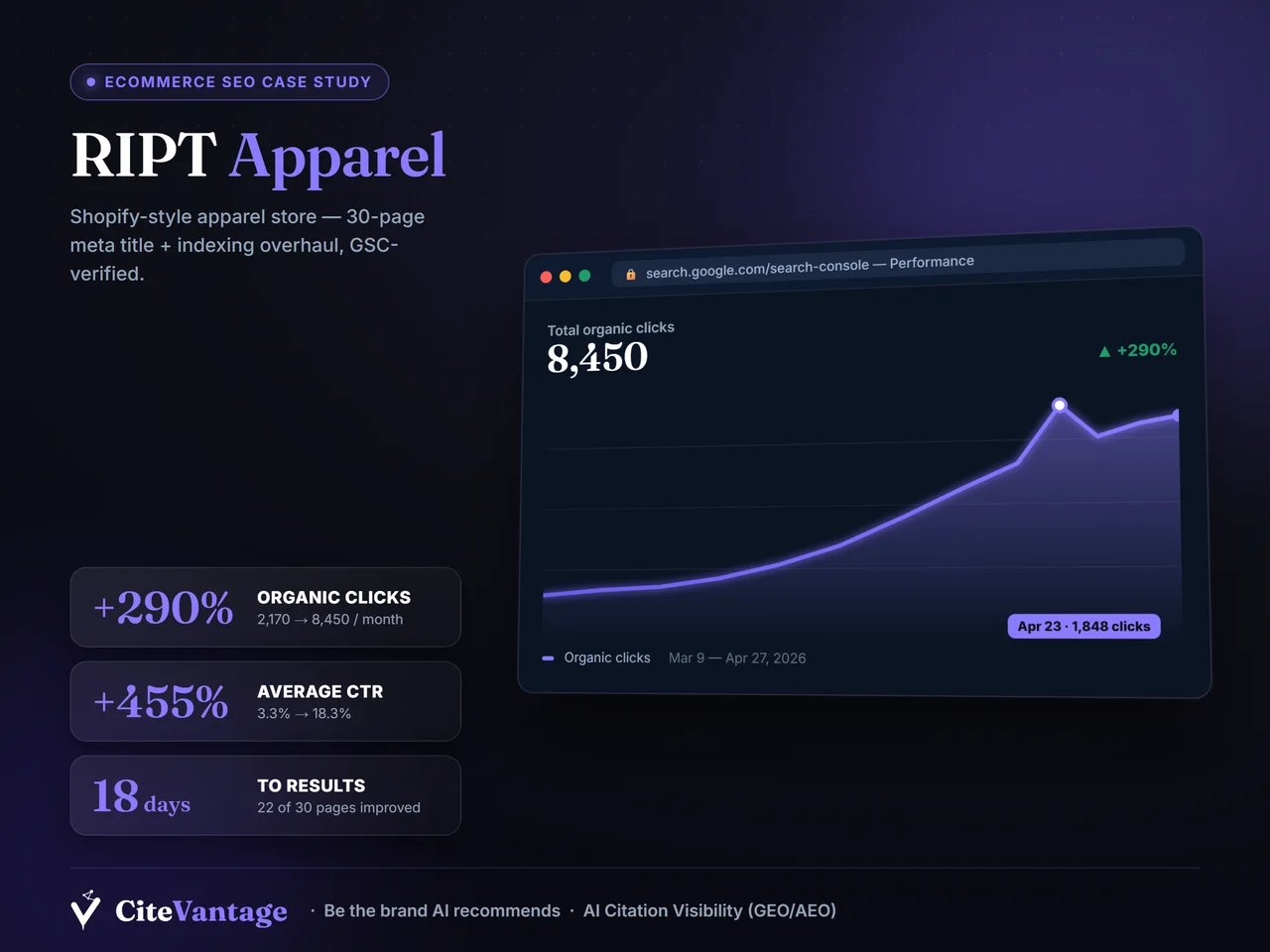
A client result with the numbers verified in Search Console
Ecommerce SEO
RIPT Apparel
RIPT Apparel had five thousand products and one page template. We started with an 18-day meta title sprint, then spent six months rebuilding the product pages themselves and clearing out an index full of variant URLs. Six months on, organic clicks are 2.3x what they were. Every number below is read from Google Search Console or Merchant Center.
2.3x organic clicks
How we start with ecommerce clients
Every ecommerce engagement starts the same way, with the free AI Visibility Audit: we run your buyer questions across four engines, screenshot every answer and show you who gets named instead of you. If the gap is worth closing, the Sprint below is the one-time project that closes it, and the guarantee covers the outcome.
AI Visibility Sprint
one-time projectThe full foundation, built and proven in 14 days. Scoped to your niche, delivered like a team. Current pricing lives on the pricing page.
90-Day Cited Guarantee: newly cited by a major AI engine on your agreed buyer questions within 90 days, or we run a second sprint free.
ecommerce questions, answered
What is ecommerce AI SEO?+
Ecommerce AI SEO (also called GEO or AEO) is the work of getting your store named when shoppers ask AI assistants what to buy. It combines classic technical SEO with Product schema, answer-shaped content and third-party proof, so engines like ChatGPT and Gemini can find, parse and confidently recommend your products.
Does AI search really send ecommerce stores traffic?+
Yes, and it is growing fast. AI assistants now answer "what should I buy" questions directly, and the stores they name get the click and the sale. Visitors from AI answers also convert better, because the assistant already did the comparing before the shopper ever reached your site.
Do I need normal SEO first, or GEO?+
Both, in the right order. AI engines can only cite stores they can crawl and understand, so technical and on-page SEO is the foundation. GEO builds on it: schema, answer-shaped content and third-party mentions. The RIPT Apparel work shows why the base matters: titles and indexing alone moved clicks 290% in 18 days.
Does this work for WooCommerce and other platforms?+
Yes. The playbook is platform-independent: crawlable pages, Product schema, answer-shaped content and citations. Shopify and WooCommerce are the most common platforms we work with, but the same fixes apply anywhere, including headless builds and custom carts.
My store has low domain authority. Can it still get cited?+
Yes. AI answers do not simply mirror domain authority. In our ongoing citation audits we have watched DA-10 sites beat DA-90 sites inside ChatGPT answers because their pages answered the question better. Structure, specificity and corroboration decide citations more often than raw authority does.
How long until my store gets cited?+
First citations often appear within weeks once the foundations are in place, usually on longer, specific questions first. Broad "best brand" questions take longer because they need third-party proof. Our 90-Day Cited Guarantee covers exactly this.
More questions? See the full FAQ or just ask us.
The research this is built on
We publish the measurement, not just the conclusion. Method, row-level data and limitations are in each one.
Research
The 150-Query Real Estate AI Search Study
150 real estate questions put to five AI engines, with every source each one cited.
Research
Which Domains AI Cites on Real Estate Questions
Every website five engines cited on real estate, with per-engine counts, as an open list.
Research
The 181-Brand AI Visibility Study
181 United States brands tested across four engines. Most were named by none of them.

Free, no call required
See where AI hides your ecommerce brand.
Two fields. We run your buyers' real questions across ChatGPT, Gemini, Perplexity and Google AI Overviews, screenshot every answer and email the report inside 48 hours. If you are already in the answer, the report says so.
Prefer to talk first? 15 minutes with Abdul, not a sales rep.
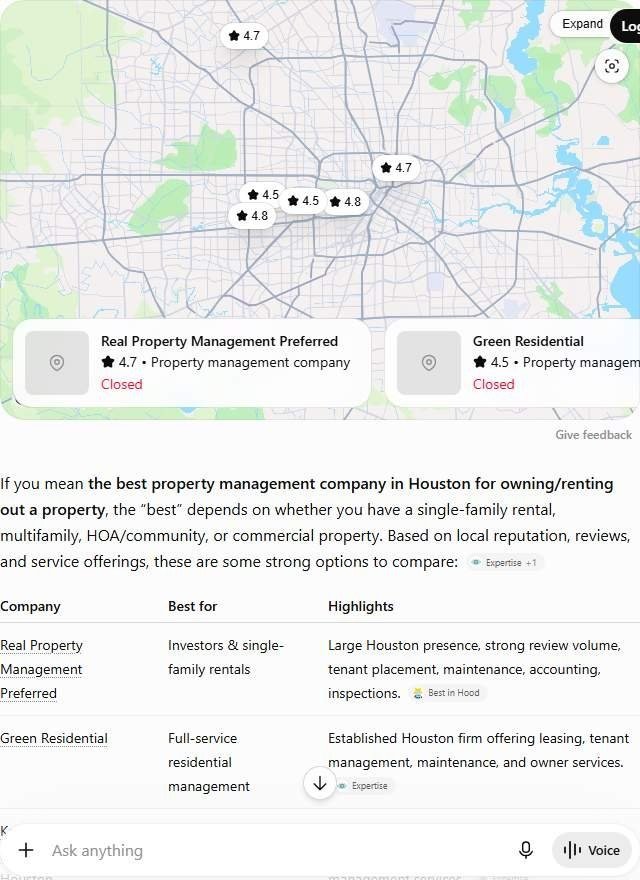
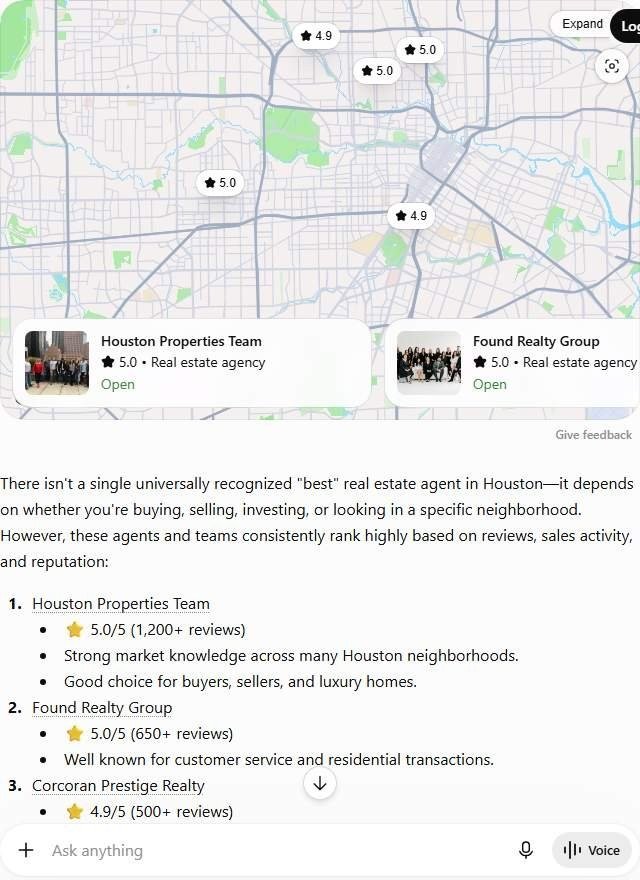 Three named. None of them you.