+43%
organic clicks over six months
Search figures verified in Google Search Console.
All case studiesEcommerce SEO
By Abdul Subkhan Published
Search Console, livebreathefutbol.com
+43%
organic clicks over six months
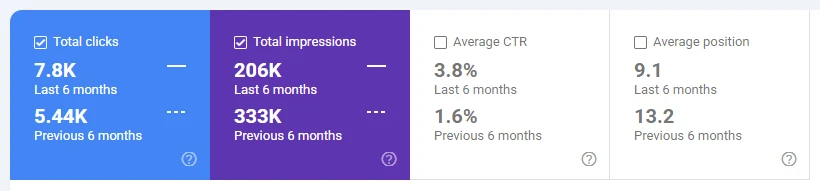
This Live Breathe Futbol case study covers a Philadelphia soccer apparel store on Shopify. Over six months organic clicks rose 43%, from 5.44K to 7.8K, while impressions fell 38%, from 333K to 206K. Click-through rate went from 1.6% to 3.8% and average position from 13.2 to 9.1. Search Console verified.
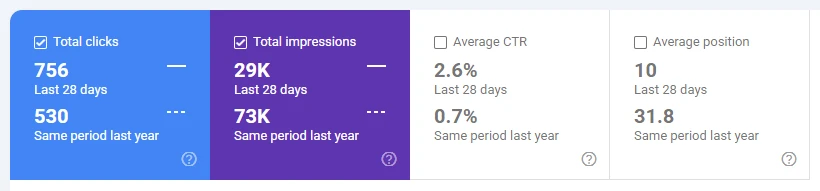
Two windows from the same property, both pulled on 21 September 2026. The six-month comparison is the main view and shows the full trade of impressions for clicks. The 28-day comparison against the same 28 days a year earlier confirms the same direction over a longer horizon, with average position moving 31.8 to 10.
See our verified reviews on Clutch+43%
organic clicks over six months
Search figures verified in Google Search Console.
3.8%
click-through rate, from 1.6%
9.1
average position, from 13.2
| Metric | 6 months, previous | 6 months, now | 28 days, a year ago | 28 days, now |
|---|---|---|---|---|
| Clicks | 5.44K | 7.8K | 530 | 756 |
| Impressions | 333K | 206K | 73K | 29K |
| Click-through rate | 1.6% | 3.8% | 0.7% | 2.6% |
| Average position | 13.2 | 9.1 | 31.8 | 10 |
Live Breathe Futbol is a Philadelphia soccer lifestyle apparel brand on Shopify. Over the last six months organic clicks rose 43%, from 5.44K to 7.8K, while impressions fell 38%, from 333K to 206K. Fewer people saw the store in search results and far more of them came through. That trade is the entire story of this page.
An impression count that falls by more than a third normally reads as a disaster, and on most dashboards it is the first thing anyone points at. Here it is the mechanism, and it was deliberate. The store was appearing for a very large volume of searches it had no realistic chance of converting, and every one of those appearances dragged the click-through rate down with it.
The question a store in that position has to answer is which searches it actually deserves to be in. Ranking for 333K impressions at 1.6% click-through rate and position 13.2 is worth less than ranking for 206K at 3.8% and position 9.1, and the second of those is what the last six months produced.
Deleting more than half a catalogue is not a normal recommendation, and it is the single decision this result rests on. The store was carrying hundreds of pages that could never win the searches they were entered into, and every one of them was making the store look worse to Google than it was. Here is what went and why.
Tools and stack
Thirty-four of the 36 of them are now gone: messi-ten-10s, cristiano, mbappe-starboy, haaland-starboy-tee, maradona-ten-10s, ronaldinho, mo-salah-starboy. A page carrying a footballer name is entered against a query owned by news outlets and the clubs themselves, so it lands around position 30 and earns nothing while counting every appearance against the store.
Face-mask products, all 6 of them, left over from 2020. Country and World Cup products, 14 of 18, tied to tournaments that had finished. Across the whole catalogue the removal rate came to 59%, and the cull took the store from more than 500 live product URLs down to 220.
A product that no longer exists and has no equivalent should say so. Mass-redirecting deleted products into a collection page gets read as a soft 404 and teaches Google nothing, so the removed URLs were left to return 404 honestly. A sample of 45 of them was rechecked on 22 September 2026 and 43 still do.
Only 7 of the 219 products published today predate 2024, on a brand trading for well over a decade. What remains is a current catalogue, and that figure reads straight out of the store product feed without touching an archive.
BreadcrumbList schema is on every page and every variant carries a SKU, so the product layer is sound. The collection layer was not part of this and has not been touched: 128 collections serve 219 products, four of them render the entire catalogue, and two hold nothing at all. That is the next job, and it is named here rather than left out.
Both windows, straight out of the property. The six-month card is first: 7.8K clicks against 5.44K, but 206K impressions against 333K, with click-through rate 3.8% against 1.6%. The year-over-year card underneath shows the same trade over 28 days, and average position moving from 31.8 to 10.
Impressions are not traffic. A store ranking at position 13.2 for a very wide query set collects a large impression count and almost no clicks from it, because position 13 is the second page and nobody goes there. Trading that reach for position 9.1 on a narrower set more than doubled the click-through rate.
AI visibility for real estate agents and brokeragesThe year-over-year window makes the same point more sharply. Over 28 days impressions fell from 73K to 29K, a much steeper drop than the six-month view, while clicks still rose from 530 to 756 and average position went 31.8 to 10. A site averaging position 31.8 is on page four, where an impression is worth close to nothing.
This is the hardest kind of result to report, because the headline metric on most dashboards went the wrong way. Anyone reading impressions as the health indicator would call this a decline. Clicks, click-through rate and average position all say otherwise, and clicks are the only one of the four that puts somebody on the site.
Deleting more than half a catalogue takes a nerve that most store owners do not have, and it is worth being clear about what makes it safe. It is safe when the pages going out are ranking at position 30 for queries they were never going to win. It is reckless when they are ranking at position 8 for queries that convert. The work is in telling those two apart before anything is deleted, which is what the query data is for.
There is also work still sitting there, and it was re-checked on 22 September 2026 rather than assumed. The tees collection page has no H1 at all and its description field is empty. The about page title is the lowercase words about us. Four collections, all, shop, all-products and new-collection, each return the same 219 products, while nigeria returns none and dc-united and mugs return one each. Three separate review apps are installed and not one of them emits review markup, so the store earns no rating snippets from any of them.
Short answers to what people ask about the Live Breathe Futbol case study: how clicks rose while impressions fell, what that trade actually means for a store, and how the figures were verified. Every number below was read off Google Search Console on 21 September 2026.

Abdul SubkhanFounder. Runs every audit himself.
abdul@citevantage.com
When the impressions that disappear were at positions too deep to earn clicks anyway.
Live Breathe Futbol went from 333K impressions at average position 13.2 and a 1.6% click-through rate to 206K impressions at position 9.1 and 3.8%. Clicks rose 43% on 38% fewer impressions. Position 13 is the second page, where almost nobody looks, so fewer and better-matched appearances earned more visits than a larger volume of listings nobody scrolled to.
A deliberate catalogue cull of 312 product pages.
The cull took the store from more than 500 live product URLs down to 220, a 59% removal rate across the catalogue. It was aimed at pages that earned very large impression counts at very poor positions and almost no clicks. Player-name products went first, 34 of the 36 of them, followed by all 6 face-mask products left over from 2020 and 14 of the 18 country and World Cup products tied to finished tournaments.
Because no amount of on-page work wins a query that news outlets and the clubs themselves own.
A product page carrying a footballer's name is entered against searches for that player, so it lands around position 30, earns almost nothing, and every appearance still counts against the store. Deleting that kind of page is safe when it ranks at position 30 for queries it could never win. A page ranking at position 8 for queries that convert is a different case, which is why the query data came before any deletion.
No, they return 404, which is the right response for a product with no equivalent to send anyone to.
Mass-redirecting deleted products into a collection page gets read as a soft 404 and teaches Google nothing, so the removed URLs were left to say plainly that the product is gone. A sample of 45 removed URLs was rechecked on 22 September 2026, and 43 of them still return 404. The scale of the cull was reconstructed from the Internet Archive CDX index, so a reader can verify it independently.
Organic clicks rose 43% over six months, from 5.44K to 7.8K.
Impressions fell 38% over the same window, from 333K to 206K, while click-through rate went from 1.6% to 3.8% and average position from 13.2 to 9.1. Fewer people saw the store in search results and far more of them came through. The 28-day year-over-year view points the same way, with clicks up from 530 to 756, and every figure comes from Google Search Console, pulled on 21 September 2026.
The same trade over a sharper window: 756 clicks in the last 28 days against 530 a year earlier.
Impressions fell much further on this view, from 73K to 29K, yet click-through rate went from 0.7% to 2.6% and average position from 31.8 to 10. A site averaging position 31.8 is on page four, where an impression is worth close to nothing, so the store has moved off page four entirely.
Only if clicks fall with it.
An impression at average position 13, or 31, is a listing almost nobody scrolls down far enough to see. The useful question is whether the searches you still appear for are ones you can win, and click-through rate is the figure that measures it. Impressions are the headline metric on most dashboards, which is why this case study would read as a decline to anyone watching that number alone, while clicks and average position both moved the right way.
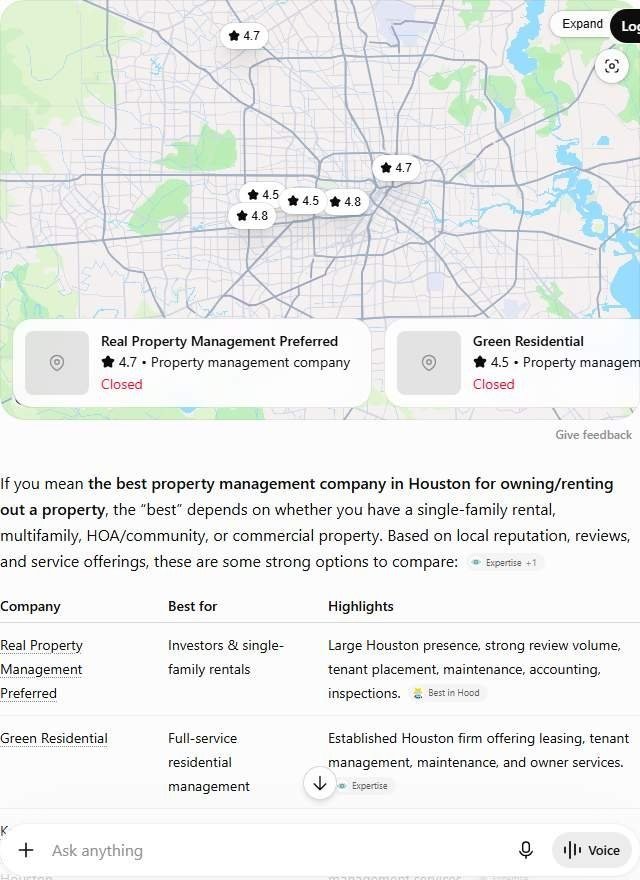
 Nine named. None of them you.
CiteVantage Assistant
AI assistant. For anything serious: abdul@citevantage.com