49
clicks, against 25 a year earlier
Search figures verified in Google Search Console.
All case studiesHacked Site Recovery
By Abdul Subkhan Published Updated
Search Console, oneclearwaterconstruction.com
49
clicks, against 25 a year earlier
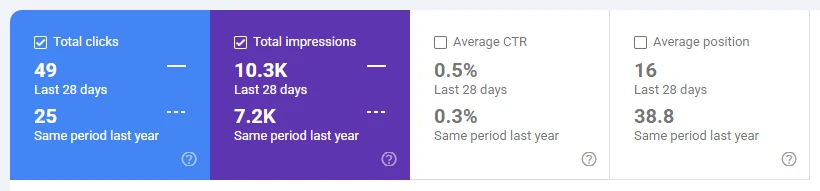
This One Clearwater Construction case study covers a Pinellas County remodeling contractor whose site was compromised, leaving roughly 15,000 casino spam URLs indexed and its real pages dropped. Six months of recovery and rebuild took average position from 38.8 to 16 and organic clicks from 25 to 49 across a 28-day window, verified in Search Console.
Two windows, both pulled from Search Console on 21 September 2026. The three-month view is close to flat and is shown here rather than left out. The year-over-year view carries the story, because it compares the site now against the site while the spam injection was still sitting in the index.
See our verified reviews on Clutch49
clicks, against 25 a year earlier
Search figures verified in Google Search Console.
16
average position, from 38.8
10.3K
impressions, from 7.2K
| Metric | 28 days, a year ago | 28 days, now | 3 months, previous | 3 months, now |
|---|---|---|---|---|
| Clicks | 25 | 49 | 145 | 155 |
| Impressions | 7.2K | 10.3K | 22.8K | 33K |
| Click-through rate | 0.3% | 0.5% | 0.6% | 0.5% |
| Average position | 38.8 | 16 | 21.0 | 17.7 |
One Clearwater Construction is a state-certified remodeling contractor working Pinellas County in Florida, from Clearwater and St. Petersburg out to Tarpon Springs and Oldsmar. The site had been attacked. Around 15,000 injected casino spam URLs were sitting in the Google index, and almost every legitimate page the business owned had been dropped out of it.
A spam injection at this scale does something worse than add junk. It buries the business. Roughly 15,000 casino URLs were indexed on the domain, which means Google had been shown 15,000 reasons to treat the site as something other than a Florida remodeling contractor, and the pages that described the actual services had almost all been dropped from the index while that was happening.
That is the honest explanation for where the numbers started. A year ago the site averaged position 38.8, which is the fourth page of results, and took 25 organic clicks across a 28-day window. A contractor at position 38.8 is, for practical purposes, absent from the search.
The site underneath the compromise was also years out of date. The design was dated enough to cost the business trust on arrival, the service pages were thin, the business details were inconsistent across the web, and there was no pricing content at all in a trade where the first thing a homeowner types is what the job costs.
You cannot optimise a site that Google has stopped trusting. The order below is the order it had to happen in: get the attacker out, get roughly 15,000 spam URLs out of the index, get the real pages back in, and only then start the work that a normal contractor engagement would begin with.
Tools and stack
Removed the injected backdoors from the WordPress install, put Wordfence in front of it, turned on two-factor authentication and moved the login URL, so the same route in could not be used twice.
The casino pages were removed at the source, then worked out of Google deliberately rather than left to expire on their own. Cleaning the server without cleaning the index leaves the business invisible for months longer than it needs to be.
Every legitimate page that had been dropped was resubmitted and tracked back into the index, alongside the new ones. This is the part that takes the time, and it is most of why the recovery ran to six months rather than six weeks.
The old design was dated enough to lose a homeowner before they read anything, so the rebuild ran alongside the content rather than after it. Bathroom renovations, kitchen remodeling, room additions, impact windows and doors, outdoor kitchens and outdoor living each got their own Clearwater page, plus real cost guides carrying actual dollar ranges instead of a call-for-a-quote line.
NAP consistency across the directories and citations that had drifted, and the service area held to Pinellas County, from Clearwater and St. Petersburg out to Tarpon Springs and Oldsmar, with nothing claimed in Pasco County.
Service and cost pages structured so an assistant can lift a straight answer out of them, which is where a growing share of homeowner research now starts. The cost guides do most of that work, because a dollar range is the most quotable thing a contractor page can carry.
Both windows, straight out of the property. The year-over-year card is the first one: 49 clicks against 25, impressions 10.3K against 7.2K, average position 16 against 38.8. That comparison period is the site while the spam injection was still indexed. The three-month card underneath holds the flatter recent quarter, 155 clicks against 145.
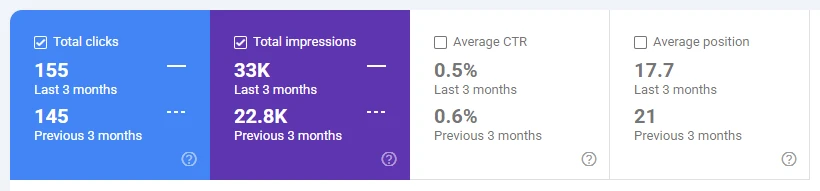
Average position 38.8 is page four, and page four is the same as not existing. Getting 15,000 spam URLs out of the index and the real pages back into it is what moved the site to position 16. The redesign, the cost guides and the local cleanup are what made that position worth holding once it arrived.
AI visibility for real estate and constructionRecovery of this kind runs on a delay that no amount of effort removes. The attacker can be locked out in a day and the injected files deleted in an afternoon. Persuading Google to drop 15,000 URLs it has already crawled and to re-trust the pages it stopped indexing is the part that takes months, and it is the reason this engagement is measured in half a year rather than in sprints.
Click-through rate is the weak part of this and it has barely moved: 0.3% to 0.5% year over year, and 0.6% down to 0.5% across the quarter. Earning 10.3K impressions in 28 days and converting 49 of them means the titles and meta descriptions have not caught up with the rankings underneath them. That is the next piece of work, not a result to celebrate.
It is also why the three-month window is on this page at all. Showing only the quarter would make a real year of progress look like nothing happened, and showing only the year would quietly bury a flat quarter. Both windows are in the table above and the reader can decide which one they believe.
Short answers to what people ask about the One Clearwater Construction case study: what the attack did to the site, how long recovery took, which window the numbers come from, and why a 0.5% click-through rate appears on a page about growth. Every figure below was read off Google Search Console on 21 September 2026.

Abdul SubkhanFounder. Runs every audit himself.
abdul@citevantage.com
It was hacked, leaving around 15,000 injected casino spam URLs in the Google index.
While that spam sat indexed on the domain, almost every legitimate page the contractor owned dropped out of Google. A year before the current window the site averaged position 38.8, which is the fourth page of results, and took 25 organic clicks in 28 days. Underneath the compromise the site was also years out of date, with thin service pages and no pricing content at all.
Roughly six months in this case, and most of that time goes on waiting for Google.
Locking the attacker out takes a day, and deleting the injected files takes an afternoon. The slow part is persuading Google to drop 15,000 URLs it has already crawled and to re-trust the legitimate pages it stopped indexing. Every real page was resubmitted and tracked back into the index, and that stage is most of why this recovery ran to six months. Extra effort does not compress it by much.
Average position moved from 38.8 to 16 and organic clicks from 25 to 49, comparing the last 28 days with the same 28 days a year earlier.
Impressions rose from 7.2K to 10.3K on the same window. The three-month view is flatter, at 155 clicks against 145 in the quarter before, and it stays on the page so the yearly numbers are read in context. The yearly comparison carries the story because its baseline is the site while the spam was still indexed. Every figure comes from Google Search Console, pulled on 21 September 2026.
The attacker was locked out and the spam removed from Google before any rebuild began.
Optimising a site that Google has stopped trusting is wasted work, so the order mattered as much as the tasks themselves. The recovery ran over roughly six months, in this sequence:
Yes, and it is the weakest number in this case study.
The site now earns 10.3K impressions in 28 days and converts 49 of them. Click-through rate has barely moved, from 0.3% to 0.5% year over year and from 0.6% down to 0.5% across the quarter. The rankings have arrived and the titles and meta descriptions have not caught up with them, so that is where the next round of work goes.
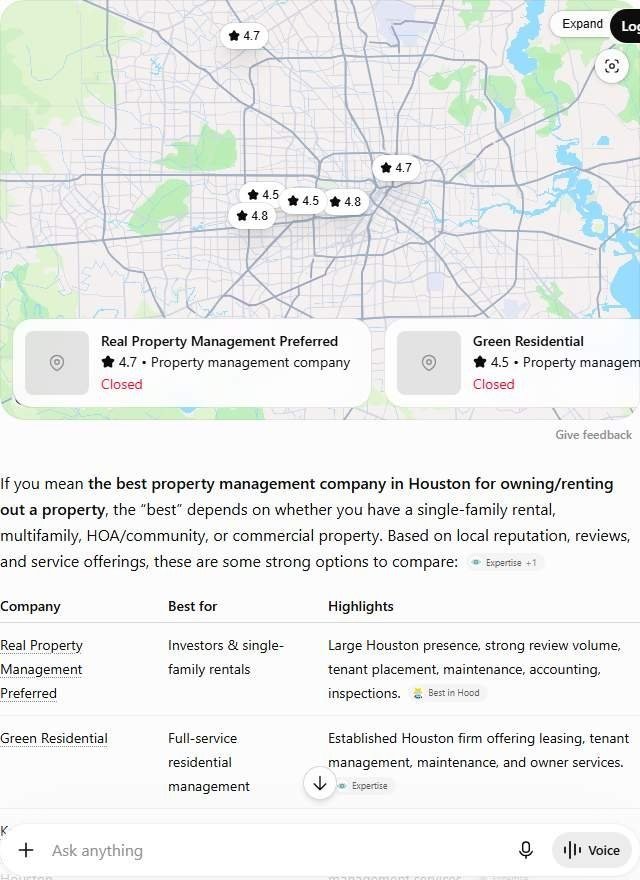
 Nine named. None of them you.
CiteVantage Assistant
AI assistant. For anything serious: abdul@citevantage.com