SaaS & B2B · GEO / AEO
The SaaS SEO agency that gets your product named when buyers ask AI for the best tool
A SaaS SEO agency for tools that never make the shortlist.
of 181 audited brands, cited zero times across four AI engines
Source: CiteVantage 181-brand audit
How does a SaaS product win the best-tool-for AI answer?
A SaaS product wins the best-tool-for answer on job-specific questions, not generic category ones. The job of a SaaS SEO agency is to give AI something to lift: SoftwareApplication and FAQ schema, honest comparison and use-case pages written around real buyer jobs, and momentum on the review platforms like G2 and Capterra that engines lean on before recommending software.
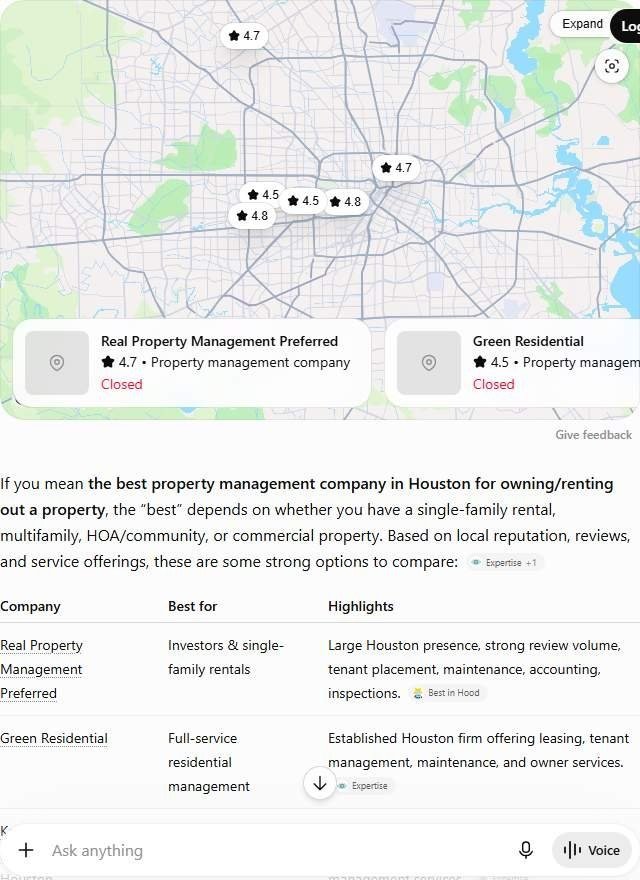
Software buying starts with a question to AI: "best email tool for Shopify", "affordable CRM for a small agency". The tools named in that answer get the trial signup, and the rest never get evaluated at all. As an AI-powered B2B SEO agency, we build the comparison content, structured data and third-party authority that put your product in that shortlist, then track it question by question.
- 87%
- of 181 audited brands were cited zero times across four AI engines
- CiteVantage 181-brand audit
- 25%
- projected drop in traditional search volume by 2026 as buyers research tools via AI
- Gartner, 2024
- 800M+
- weekly ChatGPT users, many of them asking which software to try before opening Google
- OpenAI, 2025
| Signal | What engines look for | Where most SaaS brands fall short |
|---|---|---|
| Review platform presence | Volume, recency and rating momentum on G2, Capterra and TrustRadius, the sources engines quote most often for software questions | A profile that stopped collecting reviews a year after launch, so every quote engines find is stale |
| Comparison content | Honest "X vs Y" and "best tool for" pages that map features to specific buyer jobs and admit trade-offs | No comparison pages at all, which hands competitors the framing of every matchup you appear in |
| Structured data | SoftwareApplication, FAQPage and Organization schema stating what the product does, for whom, and on what pricing model | Marketing pages with zero schema, leaving engines to guess the category from a hero headline |
| Community mentions | Recommendations in Reddit threads, Stack Overflow answers and niche communities where practitioners compare tools in public | No footprint anywhere outside the company blog, which engines treat as a claim, not proof |
| Crawlable documentation | Public docs and help-center pages AI can read to verify features, limits and integrations | Docs locked behind a login or rendered client-side so crawlers see an empty page |
| Consistent entity facts | The same product name, category and positioning across your site, LinkedIn, Crunchbase and review profiles | Rebrand leftovers and conflicting category labels that split one product into two weak entities |
| Pricing clarity | A public, crawlable pricing page an engine can read when a buyer asks what the tool costs and how tiers differ | "Contact sales" walls with nothing crawlable, so engines answer the pricing question with a competitor |
What software buyers ask AI before they ever see your homepage
Software buyers now shortlist before they visit a single vendor site. They describe their stack and their constraint to an assistant and get three products back with reasons. These are the questions we run on live engines for B2B software, and each is a shortlist your product is either on or missing from.
- "Best email marketing tool for a Shopify store?"
- "Klaviyo vs Omnisend for a small DTC brand?"
- "Affordable CRM for a 5-person agency?"
- "Cheaper alternative to HubSpot for startups?"
- "Best project management tool for a remote team of 10?"
- "Best helpdesk software for ecommerce support?"
- "Which scheduling tool integrates with Google Calendar and Stripe?"
- "Best analytics tool for a B2B SaaS under $50k MRR?"
- "Which CRM has a free trial without a credit card?"
Every question above is a shortlist your brand is either on or missing from.
Why does AI name the same three incumbents, not you?
Incumbents win these answers on volume of third-party writing. G2 and Capterra profiles, comparison posts, integration directories and years of listicles all say the same names, so the engine repeats them. A better product with thin third-party coverage has nothing behind it for the model to cite, and citation is what the answer is made of.
- 01
AI names the same three incumbents for your category on every question, while your product never appears once, whatever you ship.
- 02
Your docs, changelog and landing pages hold real answers, but none of them are answer-shaped, so AI has nothing it can lift.
- 03
You are missing from the review platforms, Reddit threads and comparison content AI leans on before it recommends any software.
- 04
Competitors own the "X vs Y" and "alternative to" queries where buying decisions actually happen, and they wrote the framing.
- 05
AI referrals are already landing in your analytics under direct or unattributed traffic, and nobody on the team owns the channel.
How does a B2B SaaS SEO agency get your product into the AI shortlist?
The lever here is third-party coverage, so most of the work happens off your own domain: review profiles, comparison and alternatives pages, integration directories and category roundups. On site we make the product entity, pricing and use cases machine-readable and answer the comparison questions directly. Then we re-run the buyer questions and show the change.
- 01
Category-level AI audit
We test the "best tool for", "X vs Y" and "alternative to" questions in your category across ChatGPT, Perplexity, Google AI Overviews and Gemini, then map exactly which answers name you, which name competitors, and which are winnable first.
- 02
Software entity and schema
SoftwareApplication, FAQPage, Organization and HowTo schema across the site, so AI engines can parse what your product does, who it is for and how it is priced without guessing from marketing copy.
- 03
Comparison and use-case content
Honest "best tool for" and "vs" pages built around real buyer jobs, each opening with a direct answer written to be quoted, each conceding what the competitor genuinely does better.
- 04
Review platform authority
Presence and momentum on G2, Capterra and the community sources AI checks before recommending software, because a shortlist an engine cannot verify in third-party sources is a shortlist it will not repeat.
- 05
Monthly share-of-voice report
A simple report on your agreed question set: which questions name your product, which still name competitors, what changed since last month, and the next moves ranked by expected impact.
SaaS SEO services, step by step, from audit to citation
Step 1
Map the questions that end in a trial
We pull the "best tool for", "vs" and "alternative to" questions real buyers in your category ask, then run each one across ChatGPT, Perplexity, Google AI Overviews and Gemini. The output is a map: which questions already name you, who gets named instead, and which answers are winnable first.
Step 2
Fix what engines cannot read
SoftwareApplication, FAQPage and Organization schema across the site. Crawler access verified for every major AI bot. Docs and pricing pages readable without JavaScript tricks, plus an llms.txt file pointing engines at your strongest pages. Boring work, and it decides whether every later step can succeed at all.
Step 3
Build the pages AI quotes
Use-case pages for each buyer job, honest comparison pages for the "vs" queries where decisions actually happen, and an alternatives page that concedes what competitors do better. Each page opens with a direct 40-word answer an engine can lift word for word, then earns it with specifics.
Step 4
Earn the third-party proof
Software recommendations lean on sources you do not own: G2, Capterra, Reddit threads, niche newsletters and comparison roundups. We build review momentum where it is thin and pitch the roundups already ranking for your category, because engines only repeat a shortlist they can verify in several independent places.
Step 5
Track share of voice monthly
Every month we rerun your question set across the four engines and report share of voice: which questions name you now, which flipped since last month, and what to build next. In our own citation audits we have watched DA-10 sites beat DA-90 incumbents on specific, well-answered questions.
| Engine | What it leans on for software questions | What that means for your product |
|---|---|---|
| ChatGPT | Brand familiarity from training data plus live web results, with heavy weight on review platforms and comparison roundups when the question is which software to pick | Momentum on G2 and Capterra plus quotable comparison pages matter more than anything your homepage says |
| Perplexity | Live retrieval with visible citations, favoring pages that answer one question cleanly, back their claims, and load fast for its crawler | Answer-shaped use-case pages get lifted almost verbatim, and the citation list shows you exactly which sources beat you |
| Google AI Overviews | Google's own index and ranking signals, compressed into a synthesized answer that sits above the classic results | Your existing SEO carries over; structured data and clear question-shaped headings decide whether you get quoted in it |
| Gemini | Google's index plus entity understanding built from the Knowledge Graph and consistent facts across the open web | Organization schema and matching entity facts everywhere decide whether it treats your product as a distinct, nameable thing |
| Copilot | Bing's index and Microsoft ecosystem context, an index most SaaS teams have never once checked their coverage in | Bing indexation, usually ignored, becomes a real acquisition channel for Microsoft-centric B2B buyers |
Weights shift with every model release. This table reflects what we observe across our ongoing multi-engine citation audits as of mid 2026, which is why we retest your question set monthly instead of assuming.
We have not published a SaaS case study yet
So we will not show you one. What we can show you is the research this method is built on and the client work we have published in other verticals. The audit that starts every engagement is free, and it measures your actual visibility before anyone signs anything.
How we start with SaaS clients
Every SaaS engagement starts the same way, with the free AI Visibility Audit: we run your buyer questions across four engines, screenshot every answer and show you who gets named instead of you. If the gap is worth closing, the Sprint below is the one-time project that closes it, and the guarantee covers the outcome.
AI Visibility Sprint
one-time projectThe full foundation, built and proven in 14 days. Scoped to your niche, delivered like a team. Current pricing lives on the pricing page.
90-Day Cited Guarantee: newly cited by a major AI engine on your agreed buyer questions within 90 days, or we run a second sprint free.
SaaS questions, answered
What does an AI-powered B2B SEO agency do differently for SaaS?+
Traditional B2B SEO chases rankings. An AI-powered B2B SEO agency also engineers how ChatGPT, Perplexity and Google AI Overviews describe and recommend your product: schema engines can parse, answer-shaped pages they can quote, review-platform proof they trust, and monthly tracking of which buyer questions actually name you.
We already rank well on Google. Why is AI not naming us?+
Rankings and citations overlap but are not the same thing. In our audit of 181 brands, 87% were cited zero times across four AI engines, and plenty of them ranked fine. Engines weigh review platforms, comparison content and structured data that classic rankings never required you to have.
Our category is dominated by big players. Is there room?+
On generic questions, the incumbents win and will keep winning. On job-specific questions ("best X for agencies", "X for freelancers", "X that integrates with Y"), AI actively looks for the specific best fit, not the biggest brand. Owning a set of narrow, honest answers is how small tools enter the shortlist.
Do G2 and Capterra reviews really matter for AI?+
Yes. Software questions are one of the cases where AI engines lean heavily on review platforms and community threads before naming anything. A thin or stale review presence usually means being skipped, whatever your website says. Review momentum, recency and rating detail all feed the shortlist engines repeat.
Should we write "us vs competitor" pages?+
Yes, honestly. Comparison queries are where buying decisions happen, and AI quotes comparison content constantly. Fair pages that concede what the competitor does better are more quotable, and more trusted, than one-sided ones. A page that only praises you reads as an ad, and engines treat it like one.
How do you measure success for SaaS?+
Share of voice in AI answers on your agreed question set: how often your product is named across ChatGPT, Gemini, Google AI Overviews and Perplexity, tracked before and after the work. We pair that with the trials and signups your analytics attribute to AI referral traffic.
More questions? See the full FAQ or just ask us.
The research this is built on
We publish the measurement, not just the conclusion. Method, row-level data and limitations are in each one.
Research
The 150-Query Real Estate AI Search Study
150 real estate questions put to five AI engines, with every source each one cited.
Research
Which Domains AI Cites on Real Estate Questions
Every website five engines cited on real estate, with per-engine counts, as an open list.
Research
The 181-Brand AI Visibility Study
181 United States brands tested across four engines. Most were named by none of them.

Free, no call required
See where AI hides your SaaS brand.
Two fields. We run your buyers' real questions across ChatGPT, Gemini, Perplexity and Google AI Overviews, screenshot every answer and email the report inside 48 hours. If you are already in the answer, the report says so.
Prefer to talk first? 15 minutes with Abdul, not a sales rep.
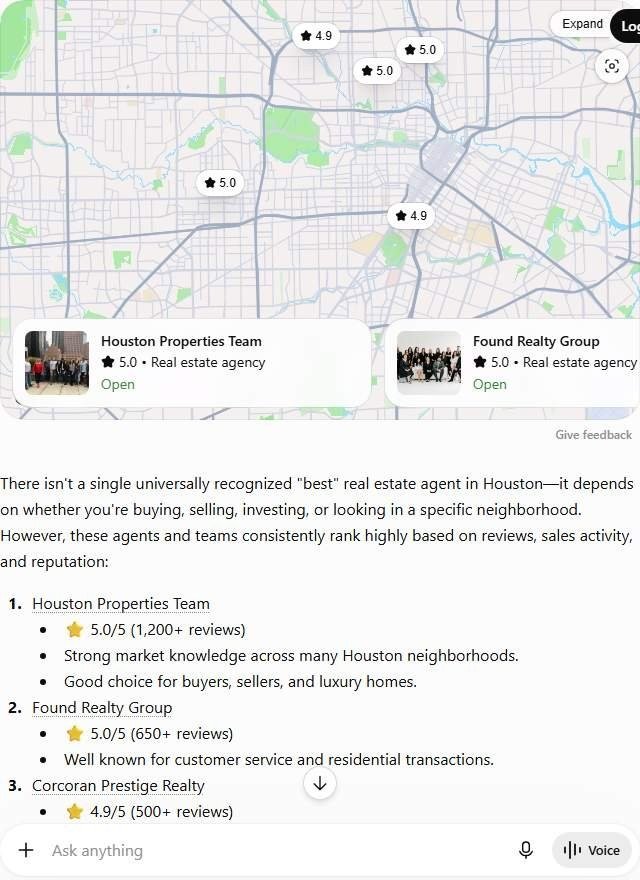 Three named. None of them you.