Most AI search statistics pages are unusable for the one job they exist to do, which is to give you a number you can quote in front of someone who might check it. This page is built to be checked. Every figure carries a named source, the date it was measured and a link to the original, and anything we could not trace that far is not here at all. If you need real estate figures specifically, our real estate SEO statistics for 2026 is the fuller sourced list, with each figure graded by source type and the whole set available as a downloadable CSV.
How many businesses are invisible to AI search?
Most of them, on every measurement anyone has published so far. The two headline figures below were produced independently, by different teams, using different methods on different populations, and they point the same way. That agreement matters more than either number on its own, because a single study can be an artefact of its own sample while two rarely are.
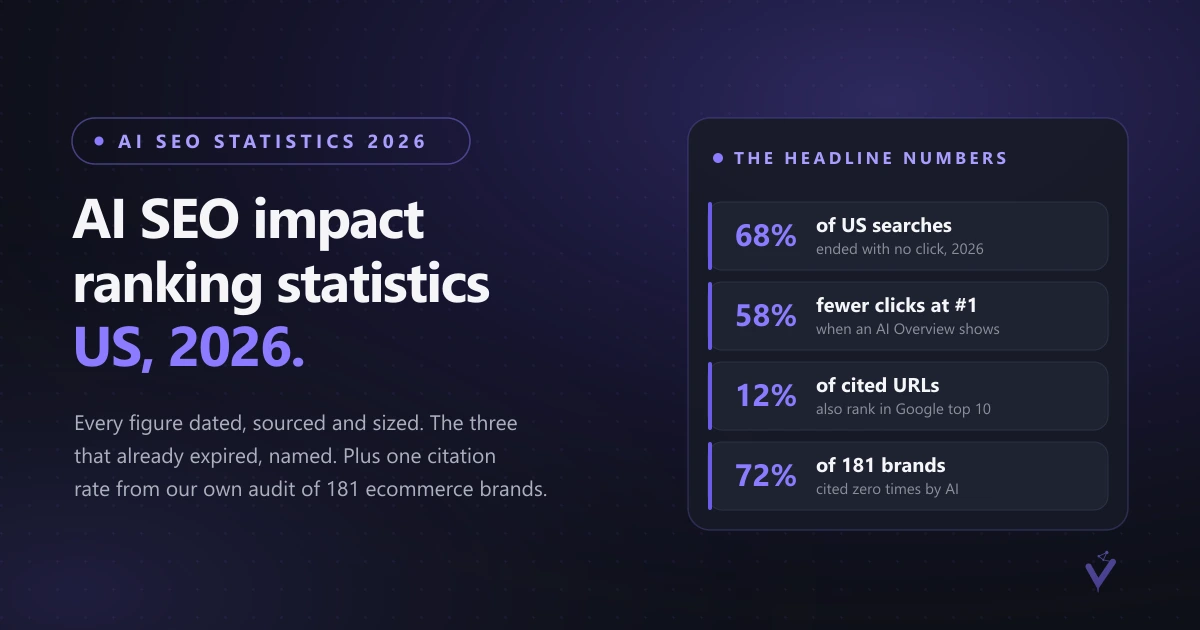
158 of 181 US ecommerce brands were cited zero times when four AI engines were each asked a category question. Every brand in the sample was actively running paid social at the time, so none of them were dormant.
First-party CiteVantage, 181-Brand AI Visibility Study June 2026
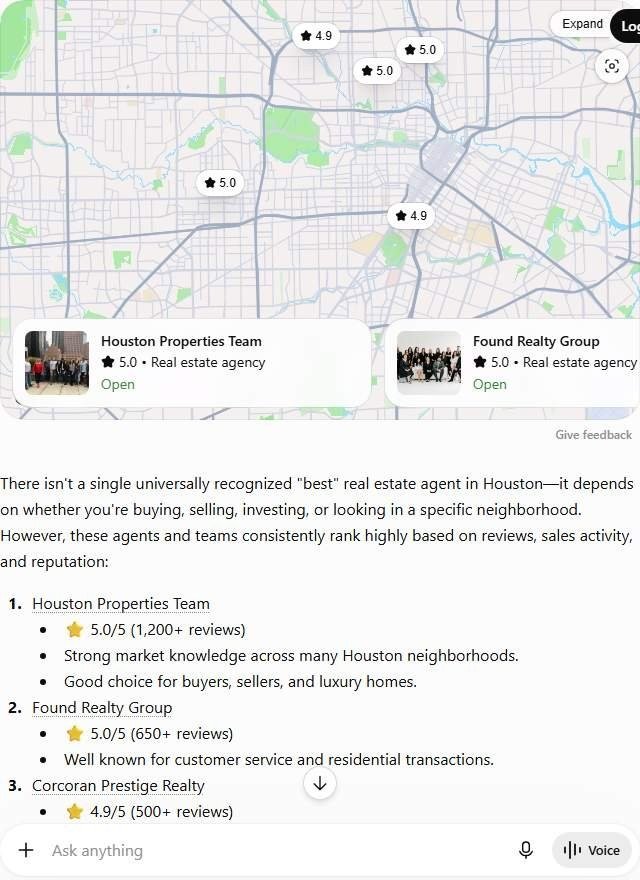
Of the ranked, website-publishing real estate agents and teams checked across the 100 largest US cities, 91.5% were never cited once by any AI platform.
Third-party Local Falcon, The Realtor AI Visibility Index August 2026
Only 21.2% of the highest-volume individual agents in those cities were cited by any AI platform. Selling the most homes in your market does not get you named.
Third-party Local Falcon, The Realtor AI Visibility Index August 2026
AI searches run across the 100 largest US cities to measure which real estate agents the engines are willing to name, and where those answers come from.
Third-party Local Falcon, The Realtor AI Visibility Index August 2026
Do AI citations transfer between engines?
Barely, and this is the best-evidenced claim on the page. Two studies run months apart, on different populations, with different methods, landed within half a percentage point of each other. If you take one thing from this page, take this: a visibility score that blends the engines together hides the specific engine you are losing.
Of 1,297 domains cited across 747 measured answers, 1,077 were cited by exactly one engine out of five. Only 3 domains were cited by all five.
First-party CiteVantage, 150-Query Real Estate AI Search Study September 2026
More than eight in ten agents named by AI were named by a single platform and by no other. Different population, different method, and within half a point of the figure above.
Third-party Local Falcon, The Realtor AI Visibility Index August 2026
Share of Perplexity citations that went to domains no other engine cited even once. Copilot sits at the opposite end on 26%, so a domain that wins Copilot is usually already winning elsewhere.
First-party CiteVantage, domains AI cites on real estate September 2026
What kind of sources does AI actually cite?
Not the institutions you would expect. On real estate marketing questions the engines lean overwhelmingly on ordinary company websites, and a single video platform outranks every major property portal combined. Read the scope note before quoting this one, because the questions behind it are agent-facing rather than consumer property search, and that changes which sites could appear at all.
Share of all citations that went to ordinary company websites rather than to portals, trade press, directories or reference sites.
First-party CiteVantage, domains AI cites on real estate September 2026
All four major US property portals drew 35 citations between them. YouTube alone drew 55. Scope matters: the questions were agent-facing and business-facing, not consumer property search.
First-party CiteVantage, domains AI cites on real estate September 2026
Eighteen of the 25 most-cited real estate agent websites carry a best real estate agents in [city] page. The agents who get named are the ones who published a ranking and put themselves on it.
Third-party Local Falcon, The Realtor AI Visibility Index August 2026
In the average US city, one agent accounts for more than a quarter of everything AI says about agents in that market.
Third-party Local Falcon, The Realtor AI Visibility Index August 2026
The number one organic result appeared in only 46% of desktop and 34% of mobile AI Overviews. More than half of desktop AI Overviews did not link to the top-ranking page at all.
Third-party Semrush, AI Overviews study September 2024, 200,000 US keywords
What is AI search doing to clicks?
Reducing them, measurably, though the picture is less uniformly bleak than most headlines suggest. One of the four numbers below has been recovering since its December 2025 low. Note also the last figure, which is the reality check: the surface everyone is writing about still accounts for a third of one percent of actual searches.
Share of clicks the top-ranking page loses when an AI Overview is present. Same position, same page, matched against Search Console data.
Third-party Ahrefs December 2025, 300,000 keywords
Share of US Google searches that ended without a click, measured by SparkToro on Similarweb clickstream data.
Third-party SparkToro, reported by Search Engine Land January to April 2026
AI Overview click-through rate rose 85% in two months from its December 2025 low, while non-AIO queries recovered from 2.8% in January 2025 to 3.8% in February 2026. The only improving trend in this group.
Third-party Seer Interactive, reported by Search Engine Land December 2025 to February 2026
Can AI crawlers even reach your site?
Not always, and the failure is completely invisible from a browser. This is the statistic most likely to apply to you without your knowing, because it is decided above your own configuration and leaves no trace in your own server logs. It also has the cheapest fix on this page, which is why it is here rather than buried in a technical post.
Cache-busted requests the full versioned GPTBot user agent got through on a mainstream shared host, while seven other identities, including the bare GPTBot token and an ordinary browser, got through on 56 of 56 from the same machine in the same minutes. The host confirmed in writing that the rate limit is intentional, server-wide and not configurable per domain.
First-party CiteVantage, GPTBot case study September 2026
Readable pages before and after a single cache-warming pass following a deploy. A purge leaves every page a cache miss, and a miss is where the refusal happens, so newly published content is the least readable content on a site.
First-party CiteVantage, GPTBot case study September 2026
How to use these AI search statistics without getting burned
Three failure modes account for almost every misquoted number in this field, and all three take a minute to avoid. Check the date, because a figure measured before AI Overviews rolled out describes a different product. Check the population, because an ecommerce sample says nothing reliable about real estate. Then check whether the number has a source at all.
The last one is more common than it should be. While rebuilding this page we dropped roughly half the statistics from its previous version for exactly that reason, and the version you are reading is shorter and more useful because of it.
Where these AI search statistics come from, and what is missing
Ten distinct sources, ranging from September 2024 to September 2026, seven of the figures our own and the rest other people’s work linked back to them. Our own measurements, led by the 150-query real estate AI search study, publish their row-level data so you can recompute rather than trust, and our AI citation methodology states what every one of those numbers must carry. The third-party figures come from named studies with stated sample sizes rather than vendor marketing pages.
What is deliberately missing is anything we could not verify. That includes several widely repeated figures about AI search adoption that trace back to a press release with no method attached, and one about citation share that we could only find quoted second-hand. If you have a primary source for either, send it and it goes in. Journalists who want our first-party findings in citation-ready form will find them, with each study’s method and the chart files, in the CiteVantage press kit.
The number that actually matters is not on this page
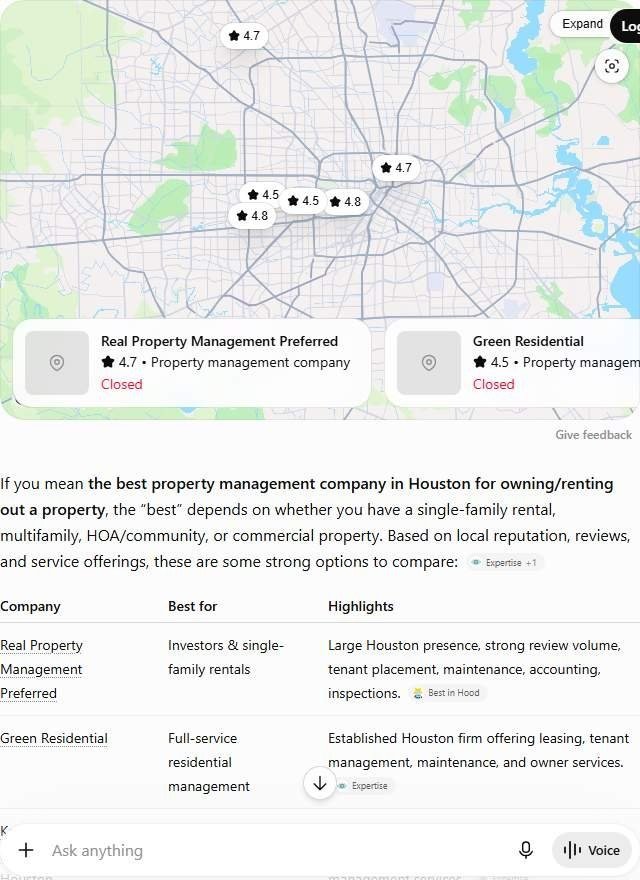
Market statistics tell you the weather. They do not tell you whether your own roof leaks. Of the businesses in our 181-brand sample, most were absent from AI answers while being entirely convinced their marketing was working, because nothing in their analytics reported the absence. There is no dashboard for an answer that never named you. The 500-query Houston real estate AI visibility study shows the same blind spot at city scale: across 2,000 answers from four AI surfaces in September 2026, about 94% of the Houston Association of Realtors’ 50,000-plus members were never named.
Running the check yourself takes a few minutes: ask each engine the questions your buyers actually ask, in a logged-out session with memory disabled, and write down who gets named. If you would rather we ran it across ChatGPT, Perplexity, Gemini and Copilot and sent you the results, our Free AI Visibility Audit does that inside 48 hours.
Frequently asked questions
Can I cite these AI search statistics?
Yes. Our first-party figures are published under CC BY 4.0 with the row-level data behind them, so you can reuse them with a link back.
Link to the individual study page rather than this roundup, because that is where the method and the raw rows live, and anyone checking your number can recompute it there. For the third-party figures, cite the original source instead of us. Every one of them is linked on its card with the date it was measured, so you can go straight to the primary study.
Why are some well-known AI search statistics missing?
We left out every figure we could not trace to a named study with a date.
A number quoted in five blog posts that all cite each other is not a source, and one unverifiable figure discredits the checkable ones sitting next to it. That rule removed several widely repeated adoption figures that lead back to a press release with no method attached, plus one citation-share number we could only find second-hand. It is also the main reason this page is shorter than most statistics roundups, and if you hold a primary source for either, send it and it goes in.
How current are these figures?
They run from September 2024 to September 2026, and every card carries its own measurement date.
AI search moves fast enough that a two-year-old figure describes a different product, so check the date before you quote anything. The Semrush AI Overviews study is the oldest here, kept because nothing newer measures the same thing at that sample size. Our own first-party figures were measured in June and September 2026, and each links to a study page that states its collection window.
Which statistics are about real estate specifically?
The Local Falcon index and our two real estate datasets, the 150-query study and the list of domains AI cites, are the real estate figures on this page.
The 181-brand study is US ecommerce and is labelled that way wherever it appears, because presenting an ecommerce sample as a real estate measurement would mislead you. The click and zero-click figures are cross-industry. Our newest real estate measurement is published separately as the 500-Query Houston Real Estate AI Visibility Study: 2,000 answers across four AI surfaces in September 2026, in which about 94% of Houston's roughly 50,000 Realtors were never named.
What is the difference between first-party and third-party here?
First-party means we ran the measurement and published the underlying data, while third-party means someone else ran it and we quote them with a link.
You can recompute any first-party figure from its row-level data instead of taking our word for it. Every card carries a badge saying which kind it is, because a vendor quoting its own research deserves more scrutiny than a vendor quoting someone else's. Apply that scrutiny to us as well: seven of the figures on this page are ours, and each links to a study page with its method and limitations.